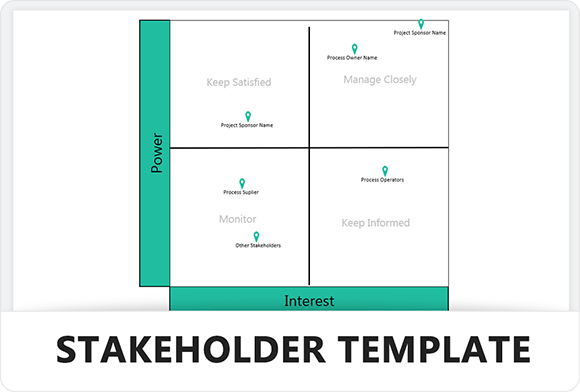
Stakeholder Priortization Matrix Template

About this Template The Stakeholder Prioritization Matrix (often called the Power/Interest Grid) is a fundamental project management tool used to map stakeholders based on their…

★★★★★
4.2 657 reviews
8k + Downloads
Updated February 2026
Template Hero

About this Template

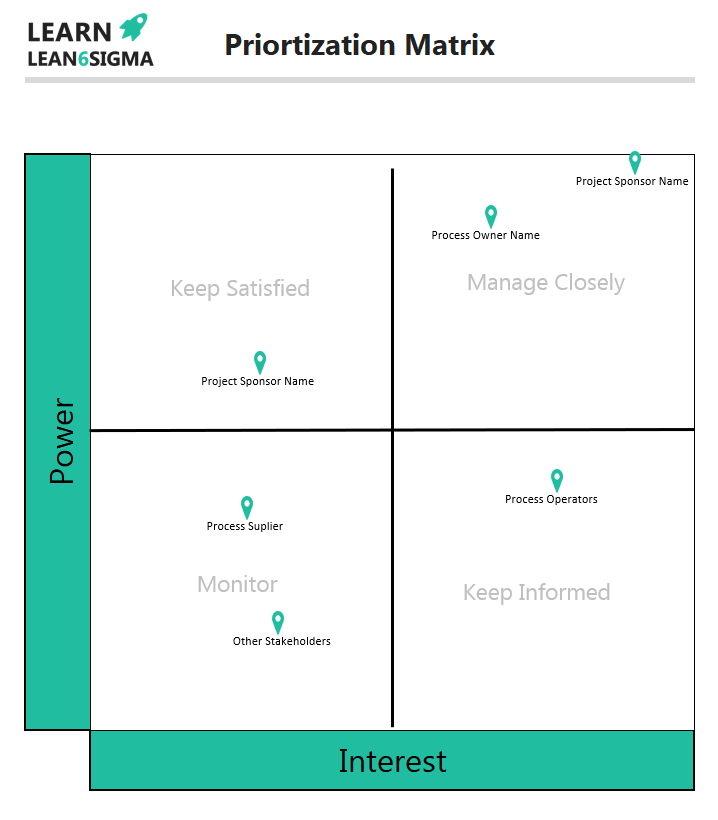
The Stakeholder Prioritization Matrix (often called the Power/Interest Grid) is a fundamental project management tool used to map stakeholders based on their level of Influence (Power) over the project and their level of Interest in its outcome.

Successful projects in the Define Phase require more than just technical solutions; they require buy-in. This matrix categorizes stakeholders into four distinct quadrants, allowing you to tailor your communication strategy—ensuring you don't over-communicate with low-impact groups or ignore powerful key players.

Use this template as part of your Project Charter or Change Management plan to identify potential blockers early.

Pro Tip: Stakeholder positions are not static. A "Monitor" stakeholder might become a "Key Player" if the project scope changes. Revisit this matrix at every tollgate review.

POWER (INFLUENCE) INTEREST Keep Satisfied Key Players Monitor Keep InformedKEEP SATISFIED MANAGE CLOSELY MONITOR KEEP INFORMED High Low Low High SPONSOR CFO END USERS IT SUPPORT PROJ. LEAD REGULATOR COMMUNITY

Engagement Strategy

Defines exactly how to communicate with each group (e.g., daily updates for Key Players vs. newsletters for Monitors).

Focus Resources

Prevents wasting time on low-impact stakeholders while ensuring high-power influencers are kept happy.

Conflict Prevention

Identifies high-power stakeholders with low interest who might become obstacles if ignored.

Project Chartering

An essential component of the Project Charter to define team roles and process owners.
FREE

Join the 28-Day Lean Challenge

Take your skills to the next level. Join 15,000+ practitioners and get exclusive tools delivered to your inbox.

Daily Lessons 5 Bonus Templates PDF Guides
Start the Challenge

No spam. Unsubscribe anytime.

How to Prioritize Stakeholders

Don't treat every stakeholder the same. Use the Power/Interest Grid to determine who needs managing, monitoring, or satisfying.

Step 01

Identify Everyone

Start broad. List every individual or group that touches your project, no matter how small their role. Don't filter them yet—just list them.

  • Internal: Employees, Managers, Quality Assurance, IT.
  • External: Customers, Suppliers, Regulators, Community.
  • Process: Upstream suppliers and downstream recipients.
Brainstorm Tip:

Use a SIPOC diagram to find stakeholders at the start (Suppliers) and end (Customers) of your process.

PROJECT $
Step 02

Analyze Power & Interest

Rate each stakeholder on two scales (Low vs. High). This isn't about how much you like them, but how much they impact the project.

  • Power (Influence): Can they cancel the budget? Can they block a process change? Can they assign resources?
  • Interest: Do they care about the outcome? Will the change affect their daily job?
Key Distinction:

A "Sponsor" usually has High Power. An "End User" often has High Interest but Low Power.

POWER HighINTEREST Low VS
Step 03

Map to the Grid

Place them in the 4 quadrants. This visual sorting hat determines your management strategy.

  • High Power / High Interest: Manage Closely (Key Players).
  • High Power / Low Interest: Keep Satisfied (Don't bore them).
  • Low Power / High Interest: Keep Informed (Allies/Reporters).
  • Low Power / Low Interest: Monitor (Minimum effort).
POWER INTEREST MANAGE!
Step 04

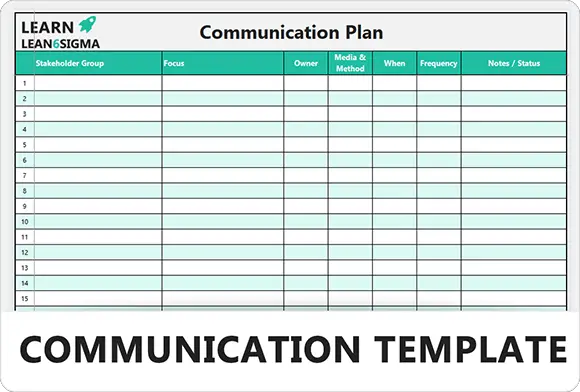
Develop Communication Plan

Now that you know who they are, define how you will talk to them. Avoid "Spray and Pray" emailing.

  • Key Players: 1-on-1 meetings, steering committees.
  • Keep Satisfied: Brief executive summaries, avoiding weeds.
  • Keep Informed: Newsletters, town halls, email blasts.
Outcome:

Create a Communication Plan matrix: Who, What, When, and How.

1 ENGAGE
FAQ

Common Questions

When should I create the Stakeholder Matrix?

You should create this as early as possible, ideally during the Define Phase when drafting the Project Charter. Identifying key players early prevents "scope creep" and ensures you don't miss critical requirements from influential groups.

Should I share this matrix with the stakeholders?

Proceed with caution. This is primarily an internal strategy document for the project team. Labeling someone as "Low Power" or "Low Interest" can be politically sensitive and may damage relationships. Keep this document confidential within the core team.

What distinguishes Power from Interest?

Power refers to the ability to influence the project's direction, budget, or resources (e.g., a CFO). Interest refers to how much the project's outcome will affect their day-to-day work (e.g., a line operator). A stakeholder can have high interest but very little power to change the project.

What if a stakeholder is in the middle of the grid?

If a stakeholder sits on a line (e.g., medium power/medium interest), always "round up." Treat them as high power or high interest to be safe. It is better to over-communicate with them than to ignore a potential risk.

How often should I update the matrix?

Stakeholder positions are dynamic. A "Monitor" stakeholder might become a "Key Player" as the project moves from planning to implementation. Review this matrix at every Stage Gate or Tollgate review to adjust your communication plan.
Free for Personal Use

Free

Instant Download • No CC Required

Download Excel
Secure SSL 256-bit Encrypted

What's Included

Free Template

Stakeholder Priortization Matrix Template

Download Now

On this page