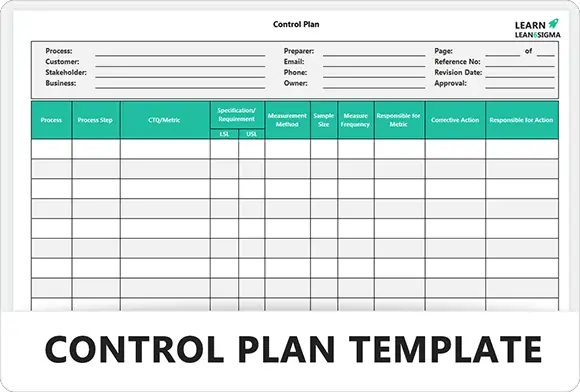
Control Plan Template
This document establishes the monitoring procedures, measurement systems, and corrective actions necessary to maintain process capability, ensuring products consistently meet quality standards and specific customer requirements.
★★★★★
4.3 125 reviews ↓ 4K + Downloads
↻ Updated February 2026

About this Template
The Control Plan is the master document for process stability. It details exactly how quality is maintained for a specific part or process. It is the central artifact of the Control Phase in Lean Six Sigma.
Unlike a one-time project summary, the Control Plan is a living document. It describes the characteristics being monitored, the measurement methods (gauges/tools), sample sizes, and the specific Reaction Plan required if a process goes out of control.
Use this template to transition ownership from the project team to process owners, ensuring that improvements are sustained over the long term.
Pro Tip: This is a "living" document. It must be updated whenever the process changes, when new risks are identified (FMEA), or when measurement methods (MSA) are improved.
Process Stability
Ensures the process remains within defined statistical limits and prevents regression to previous performance levels.
Measurement System
Defines the specific gages, tools, and testing frequencies required to ensure data accuracy and consistency.
Ownership & Action
Assigns clear responsibilities for monitoring and defines the "Reaction Plan" for when specs are not met.
Living Document
Acts as a dynamic guide that must be updated whenever process flows change, tooling updates, or new risks occur.
Perfect For
Control Phase DMAIC Sustaining Gains Quality Assurance Standard Work
The Control Equation: Y = f(X)
Effective Control Plans are built on the understanding of cause and effect. We do not just inspect the result; we control the variables that cause it.
KPIV
The "X" Variables
These are the Key Process Input Variables (Inputs). They are the "knobs" on the machine. In a Control Plan, we set strict settings for these (e.g., Oven Temp must be 200°C ±5°). If we control the Xs, the Y takes care of itself.
KPOV
The "Y" Variable
This is the Key Process Output Variable (Output). This is what the customer receives. We monitor this to verify that our controls on the inputs are working. We usually measure Y less frequently if the Xs are well-controlled.
Key Concepts
Root Cause Analysis Process Capability Predictive Control Transfer Function
FREE
Join the 28-Day Lean Challenge
Take your skills to the next level. Join 15,000+ practitioners and get exclusive tools delivered to your inbox.
Daily Lessons 5 Bonus Templates PDF Guides
Start the Challenge
No spam. Unsubscribe anytime.
The 6-Step Control Plan Cycle
A comprehensive workflow to identify risks, set standards, and maintain stability. This cycle ensures you control the root causes, not just the symptoms.
Step 01
Map Process Steps
You cannot control what you have not mapped. Use a Flowchart or Process Map to visualize every step where value—or variation—is added.
Why start here?
Ensures no operation is missed (e.g., receiving, heating, cooling, shipping).
Step 02
Identify Failure Modes (FMEA)
Determine where the process might fail. High-risk steps identified in your PFMEA (Process Failure Mode Effects Analysis) must be included in the Control Plan.
- Severity: Impact on customer.
- Occurrence: Frequency of failure.
- Detection: Chance of catching it.
Step 03
Define Characteristics
Link the Inputs (Xs) to Outputs (Ys). Establish the tolerances and specifications required for the product to function correctly.
Rule of Thumb:
Control the Process (Xs) to guarantee the Product (Ys).
Step 04
Validate Measurement (MSA)
Before trusting the data, validate the gauge. Define the measurement technique (Gauge, Caliper, Visual) and ensure it passes a Gauge R&R study.
- Equipment: Specific tool ID used.
- Method: Standard Operating Procedure (SOP).
Step 05
Sampling Frequency
How often will you check? Higher risk processes require higher frequency (e.g., 100% inspection) until stability is proven (SPC).
- Sample Size: How many parts? (e.g., n=5).
- Frequency: How often? (e.g., Hourly, per Shift).
Step 06
Reaction Plan (OCAP)
The "If-Then" logic. If the process drifts, what specific action does the operator take? This removes ambiguity during a crisis.
Example:
"If Temp > 200°C: Stop machine, segregate last 2 hours of production, call Supervisor."
Control Plan FAQ
Common Questions
Why do we need a Control Plan?
Without a Control Plan, process improvements often degrade over time. It acts as the wedge that sustains the gains, ensuring the process remains stable and consistent regardless of which operator is running it.
What is the difference between Spec Limits and Control Limits?
Specification Limits (LSL/USL) represent the Voice of the Customer (what they want).
Control Limits (LCL/UCL) represent the Voice of the Process (what the machine delivers). A process is "capable" when the Control Limits fit comfortably inside the Spec Limits.
What is a Reaction Plan (OCAP)?
The "Out of Control Action Plan" (OCAP) removes the guesswork during a failure. It gives the operator a clear flowchart: "If measurement is X, then stop the machine and call Y." This prevents bad parts from reaching the customer.
Is the Control Plan a one-time document?
No. It is a living document. It must be updated whenever the process changes (new tooling, new materials), when customer complaints occur, or when the FMEA (Risk Assessment) is updated.
Related Templates
View Library
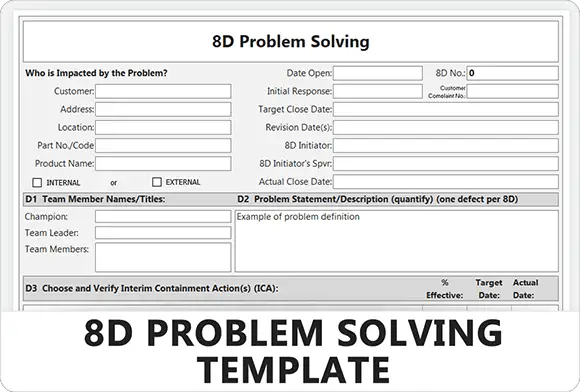
Root Cause Analysis8D Problem Solving Template
4.3
19K +
TemplateRACI Matrix Template
4.3
28K +
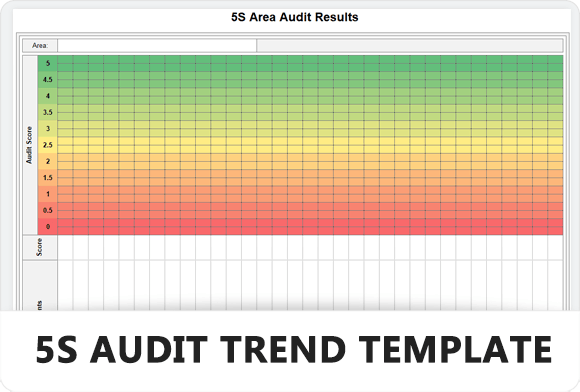
5S5S Audit Trend Template
4.4
45K +
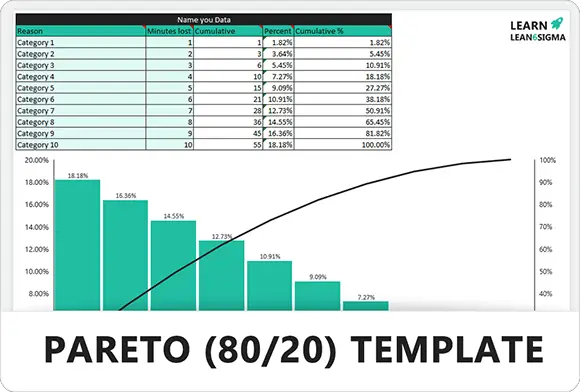
Root Cause AnalysisPareto (80/20) Template
4.1
1467
TemplateSWOT Analysis Template
3.8
11K +
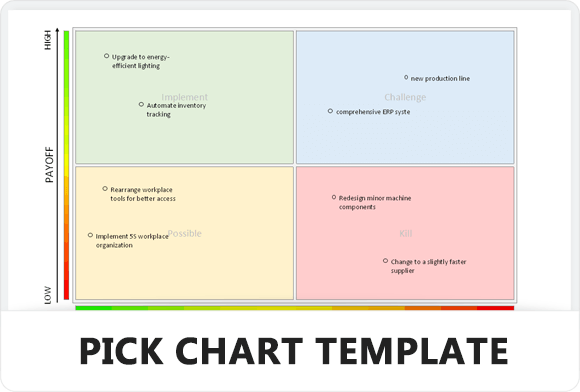
PrioritisationPICK Chart Template
4.0
10K +
Six SigmaProject Charter Template
4.6
22k +
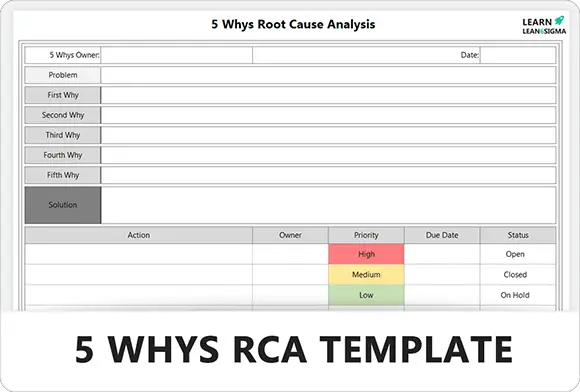
Root Cause Analysis5 Whys Template
4.2
33K +
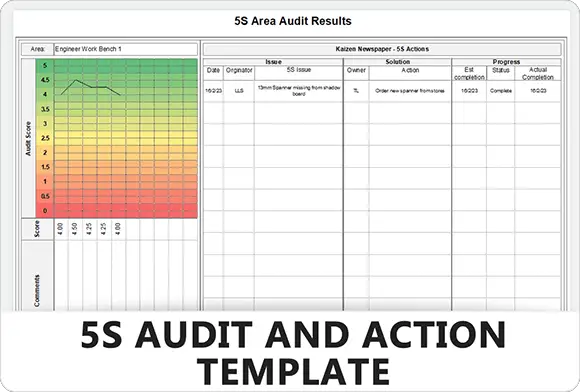
5S5S Audit and Action Template
4.9
45K +
Risk ManagementRisk Assessment Template
4.4
14K +
TemplateLessons Learned Template
3.8
2.5K +
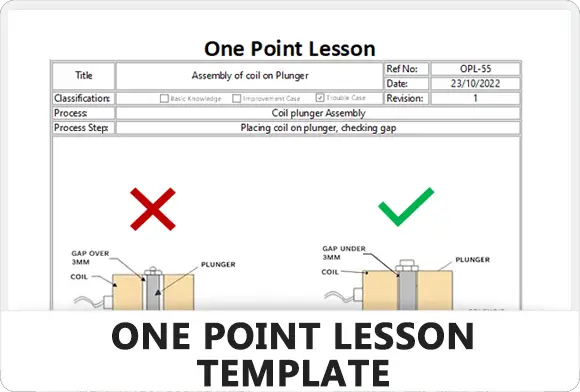
TemplateOne Point Lesson Template
4.8
12K +
TEMPLATEOEE Calculator Template
4.0
1.1K +
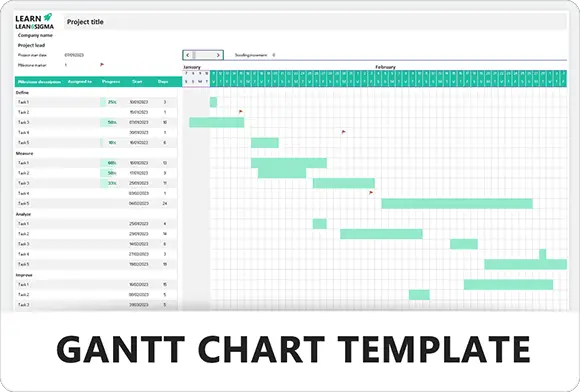
TemplateGantt Chart Template
4.1
1K +
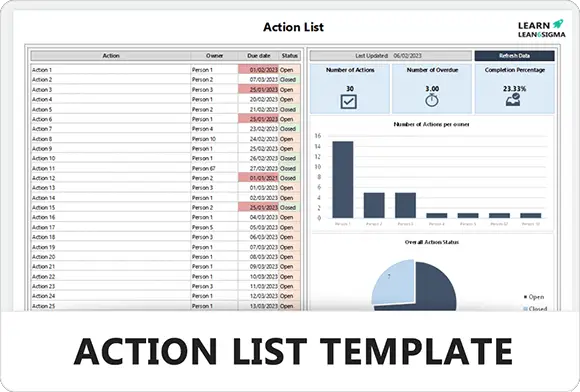
Six SigmaAction List Template
3.7
1K +
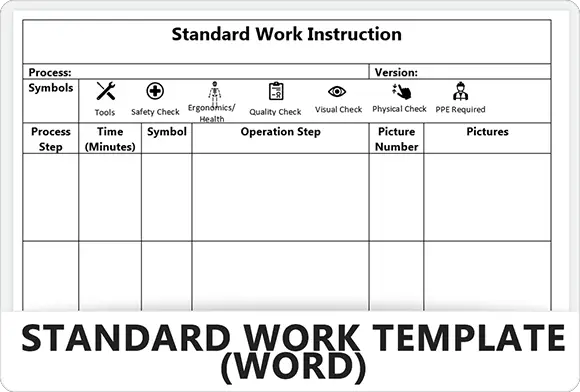
TemplateStandard Work Instructions Template (Word)
5.0
1k+
TemplateHistogram Template
3.8
1K +
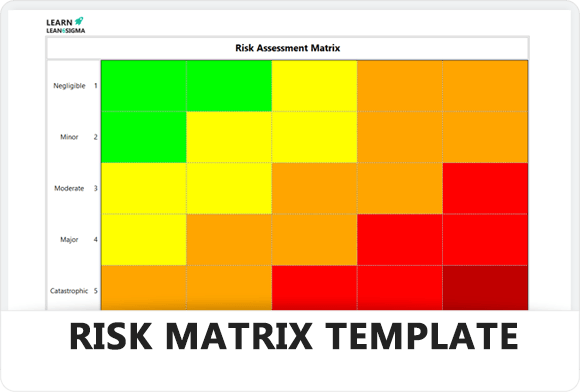
Risk ManagementRisk Assessment Matrix Template
4.1
8.9K
Risk ManagementFMEA Template for Risk Analysis and Failure Prevention
4.8
85k +
Six SigmaDMAIC Project Report Template
4.7
120K +
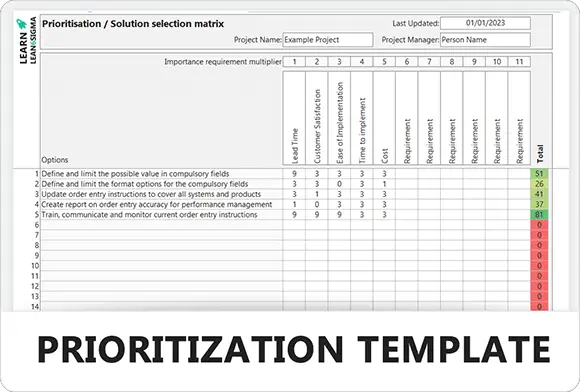
PrioritisationPrioritization Matrix Template
4.6
18K +
Six SigmaIs/Is Not Template
4
4K +
TemplateStandard Work Instructions Template
4.7
83K +
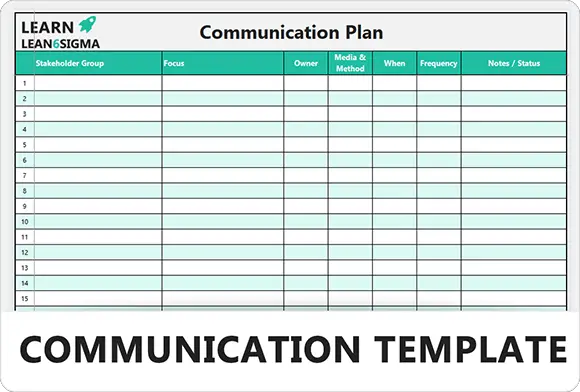
Six SigmaCommunication Plan Template
4.4
7K +
Free for Personal Use
Free
Instant Download • No CC Required
Download Excel Secure SSL 256-bit Encrypted
What's Included
Free Template
Control Plan Template