DMAIC Project Report Template

The DMAIC Project Report Template streamlines Six Sigma initiatives by guiding users through Define, Measure, Analyze, Improve, and Control phases, ensuring rigorous data analysis and sustainable process solutions.

★★★★★
4.7 5289 reviews
120K + Downloads
Updated February 2026
Template Hero

About this Template

The DMAIC Project Report is the standard communication tool used to guide a Six Sigma project from inception to closure. It provides a structured narrative that mirrors the five phases of the improvement cycle: Define, Measure, Analyze, Improve, and Control.

Unlike a simple status update, this template is designed for Tollgate Reviews—critical meetings where stakeholders decide if a project has met the requirements to move to the next phase. It ensures that the "story" of the data is clear, logical, and supports the solutions implemented.

Use this template to document your problem statement, showcase your data analysis, and validate that your improvements are sustainable over time.

Pro Tip: Don't just paste charts. For every visual in your report, add a "Key Insight" text box. Executives want to know "So what?" immediately, without having to interpret the raw data themselves.

DEFINE MEASURE ANALYZE IMPROVE CONTROL CURRENT PHASE COMPLETED GATES

Tollgate Ready

Structured specifically for Phase Gate reviews, ensuring you have all required deliverables before moving forward.

Standardized Flow

Eliminates the guesswork of formatting. Every project manager reports in the same visual language.

Executive Summary

Includes a dedicated "Project at a Glance" section for high-level stakeholders who have limited time.

Root Cause Logic

Guides the narrative from Problem (Define) to Root Cause (Analyze) to Solution (Improve) seamlessly.

FREE

Join the 28-Day Lean Challenge

Take your skills to the next level. Join 15,000+ practitioners and get exclusive tools delivered to your inbox.

Daily Lessons 5 Bonus Templates PDF Guides
Start the Challenge

No spam. Unsubscribe anytime.

The 5 Phases of DMAIC

A data-driven improvement cycle used for optimizing and stabilizing business processes and designs.

Define

What is the problem?

The goal is to clarify the problem statement, the scope of the project, and the customer requirements (VOC). Without a clear definition, the project will suffer from "scope creep."

  • Project Charter: The contract between the team and leadership.
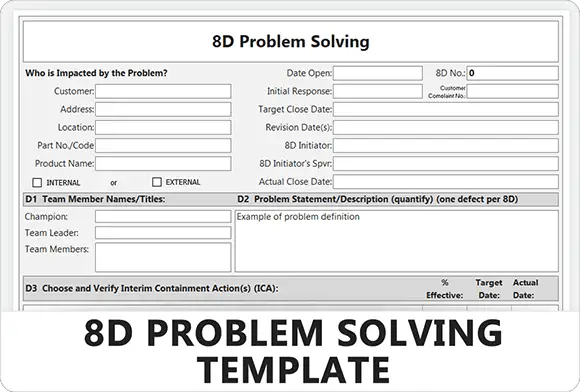
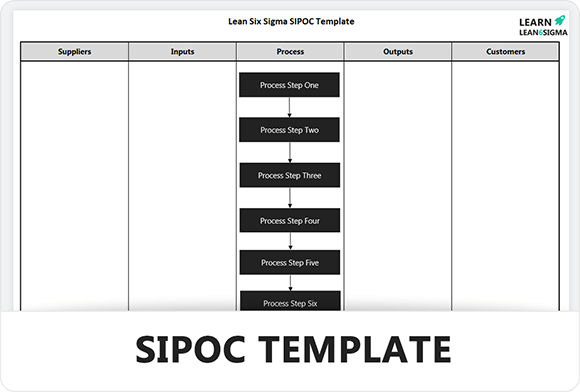
  • SIPOC: A high-level process map defining Suppliers, Inputs, Process, Outputs, and Customers.
  • Voice of Customer: Identifying Critical-to-Quality (CTQ) trees.
Deliverable:

A signed Project Charter approving the scope.

Measure

How does the process perform now?

Establish a baseline. You must validate your measurement system (MSA) to ensure your data is reliable before you start analyzing it.

  • Data Collection Plan: Who measures what, when, and how?
  • Baseline Sigma: Calculating the current defect rate (DPMO).
  • Current State Map: Detailed process mapping.
Key Question:

"Is my data reliable, and what is the current capability?"

BASELINE
Analyze

What is the Root Cause?

Move from the "Vital Few" variables to the "Trivial Many." Use data to verify hypotheses about why the defects are occurring.

  • Fishbone Diagram: Used to brainstorm potential causes (Man, Machine, Material, Method).
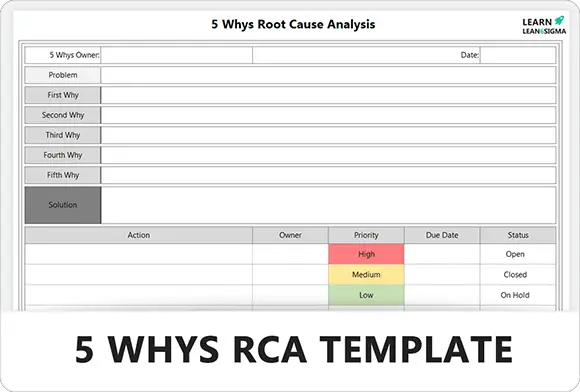
  • 5 Whys: Drilling down past symptoms to the root.
  • Hypothesis Testing: Statistical validation (t-test, ANOVA, Chi-Square).
The Goal:

Identify Y = f(x) (The Output is a function of Inputs).

Improve

How do we fix the root cause?

Develop, pilot, and implement solutions. This phase often involves Design of Experiments (DOE) to find the optimal settings for a process.

  • Brainstorming: Generating solutions for the verified root causes.
  • Pilot Run: Small scale implementation to minimize risk.
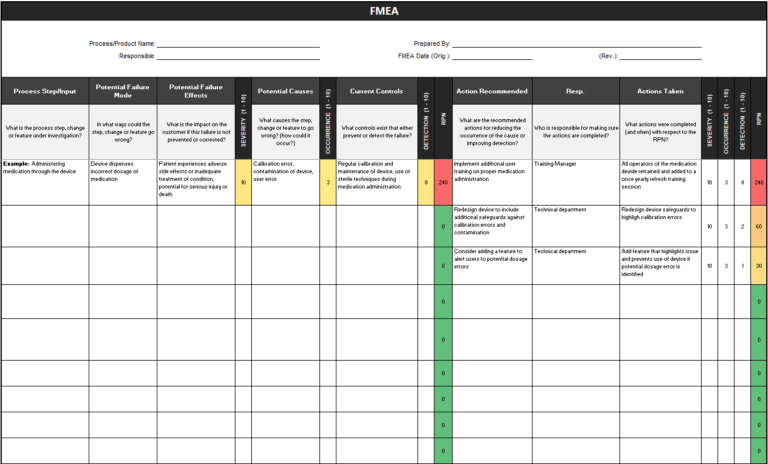
  • FMEA: Assessing risk of the new process before full launch.
Strategy:

Focus on Poka-Yoke (Mistake Proofing) over human inspection.

Control

How do we sustain the gains?

The "Project" ends, but the "Process" continues. Control is about handing over a stable process to the process owner.

  • Control Charts (SPC): Monitoring the process within Upper and Lower Control Limits.
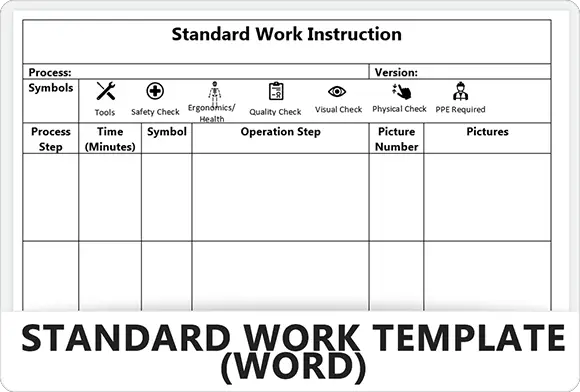
  • SOPs: Standard Operating Procedures updated.
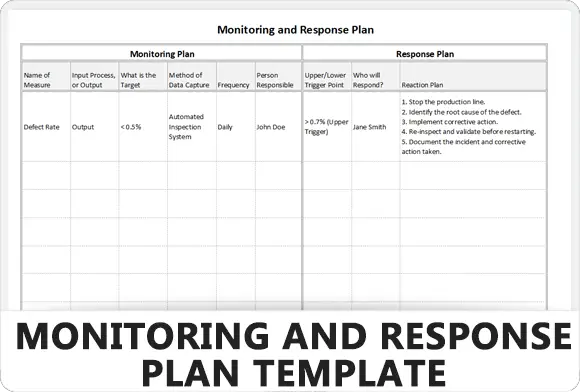
  • Control Plan: Response plan if the process drifts out of control.
Deliverable:

Project handover and financial validation of savings.

UCL LCL
Six Sigma FAQ

Common Questions

What is DMAIC used for?

DMAIC is a data-driven improvement cycle used for optimizing existing business processes. It is the core tool of the Six Sigma methodology.

It follows 5 sequential phases: Define the problem, Measure the current baseline, Analyze root causes, Improve the process, and Control the future state to ensure long-term stability.

What is the difference between DMAIC and DMADV?

This is the most common confusion in Six Sigma. You use DMAIC when a process already exists but is broken or not meeting specifications.

You use DMADV (Define, Measure, Analyze, Design, Verify), also known as DFSS (Design for Six Sigma), when you need to create a new process or product from scratch because the current one is fundamentally incapable of meeting requirements.

What is a Tollgate Review?

A "Tollgate" is a mandatory checkpoint between each phase (e.g., between Measure and Analyze). During a Tollgate Review, the project lead presents their deliverables to the Project Sponsor or Master Black Belt.

The project cannot proceed to the next phase until the Sponsor signs off, ensuring that the work was done correctly and the project is still financially viable.

Can I skip the Measure phase if I have data?

No. Having historical data is not the same as having validated data.

The Measure phase isn't just about collecting numbers; it is about performing a Measurement System Analysis (MSA) to ensure your tools, people, and methods are recording data accurately. If you skip this, you risk solving a problem based on bad information.

Why is the "Control" phase necessary?

Improvement is easy; sustainability is hard. The Control phase installs the "brakes and steering" for the process owner.

It typically involves creating a Control Plan and implementing Statistical Process Control (SPC) charts. These tools trigger an alert if the process begins to drift, preventing the problem from returning after the project team disbands.

Free for Personal Use

Free

Instant Download • No CC Required

Download Excel
Secure SSL 256-bit Encrypted

What's Included

Free Template

DMAIC Project Report Template

Download Now

On this page