How to Do a Risk Assessment: A Step-by-Step Guide to Identify and Minimize Risks
Imagine launching a major project, everything seems to be going smoothly—until an unexpected problem grinds progress to a halt. Suddenly, costs skyrocket, deadlines slip, and your team is scrambling to fix something that could have been avoided. Sound familiar?
This is where risk assessments prove their value. Conducting a proper risk assessment means you’re not leaving success to chance—you’re anticipating potential challenges and preparing mitigation strategies before they derail you.
In this guide, we’ll break down the process into actionable steps. You’ll learn how to identify risks, evaluate their impact, and prioritize mitigation efforts. By the end, you’ll have the tools to protect your project and keep everything on track.
Understanding the Basics of Risk Assessment
A risk assessment is more than a checkbox activity; it’s a proactive approach to safeguarding your project, team, and resources. It involves identifying potential threats, analyzing their impact, and determining how to address them.
Here’s why it’s critical:
- Prevention over cure: A thorough risk assessment allows you to take preventive actions, avoiding reactive firefighting later.
- Protection of resources: From budgets to personnel, you ensure minimal disruption and reduced damage.
- Compliance and better decision-making: Many industries require risk assessments for legal or quality standards.
Example:
Consider a manufacturing line introducing a new product. Without assessing risks such as machine failure, supplier delays, or operator training gaps, production may face major disruptions. However, identifying and mitigating these risks early could prevent costly downtime and missed deadlines.
Up next, we’ll walk you through a step-by-step method for effective risk assessment using tools, tips, and examples you can apply today.
Step-by-Step Guide to Conducting a Risk Assessment
Step 1: Identify Risks (Know Where to Look)
The first step is uncovering every possible risk—this means going beyond obvious concerns. Risks come from multiple areas:
- Internal: Equipment malfunctions, process errors, lack of training, human errors.
- External: Supply chain disruptions, market changes, regulatory requirements, natural events.
Where to find risks:
- Review past incidents or project failures (historical data).
- Engage with key stakeholders, especially frontline operators—they often see risks before management does.
- Utilize tools like SIPOC diagrams or FMEA (Failure Mode and Effects Analysis) to identify weak spots.
💡 Tip: Create a brainstorming session and encourage your team to think about potential risks during different phases of the process.
Step 2: Assess the Severity and Likelihood of Risks
Not all risks are created equal. Once you’ve identified risks, determine which ones need immediate attention and which ones are lower priority. This is done by assessing:
- Likelihood: How often could this risk occur?
- Impact: If it happens, what’s the potential damage?
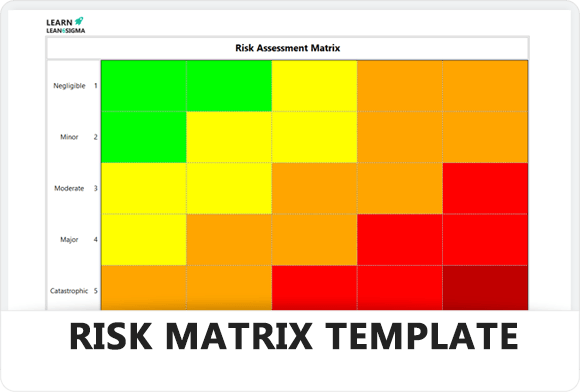
Use a Risk Matrix to categorize risks. A typical 5×5 grid assigns risks as low, medium, or high based on their likelihood and impact. For example:

Example:
- A machine breakdown occurring every quarter with significant downtime would rank as high likelihood and high impact.
- A data entry error that happens once a year with minimal impact might rank low likelihood and low impact.
Download the Risk Matrix Template.
Step 3: Prioritize Risks
Focus on risks that are high impact and high probability—these can derail your project. However, don’t ignore medium-priority risks completely. Rank the risks based on the Risk Matrix and assign them to teams for resolution.
Pro Tip: Don’t fall into “analysis paralysis” by trying to solve every possible risk. Prioritization ensures you’re managing time effectively.
Step 4: Develop Mitigation Strategies
There are four main ways to deal with risks:
- Avoid the risk: Change processes or decisions to eliminate the risk entirely.
- Reduce the risk: Take steps to minimize likelihood or impact (e.g., preventive maintenance).
- Transfer the risk: Pass it to a third party (e.g., insurance or supplier contracts).
- Accept the risk: For low-priority risks, monitor but take no immediate action.
Example:
Let’s say you’ve identified a risk of supply chain delays for critical materials. Your mitigation strategy could be:
- Reducing the risk by having a backup supplier.
- Transferring the risk by including penalty clauses in supplier contracts.
Step 5: Monitor and Reassess Risks Regularly
Risks evolve, and so should your risk assessment. Implement a monitoring plan to regularly review and update your risk profile.
When to reassess:
- At major project milestones.
- When significant changes occur (e.g., new vendors, equipment upgrades).
- As part of ongoing Continuous Improvement processes like Gemba walks.
💡 Tip: Integrate risk monitoring into your existing Lean routines to minimize extra work.
Now that you have a clear process, let’s look at common mistakes you should avoid during risk assessments.
Common Pitfalls to Avoid When Conducting Risk Assessments
Even the best-intentioned risk assessments can fail if you’re not careful. Here are the most common mistakes and how to avoid them:
1. Ignoring “Small” Risks
It’s easy to dismiss low-impact, low-likelihood risks as “not worth worrying about.” But small risks can add up and create big problems through accumulation or unforeseen interactions. For example, minor delays in one process might seem insignificant but could cascade into major production bottlenecks.
How to avoid this:
Track low-priority risks and monitor them regularly. A small issue today could become critical tomorrow if left unchecked.
2. Incomplete Stakeholder Involvement
Risk assessments shouldn’t be confined to boardroom meetings. When you exclude key stakeholders—such as shop-floor operators or external suppliers—you’re likely to miss critical risks.
Example:
An operator might notice that a machine frequently jams during maintenance, but if they’re not part of the discussion, that risk may go undetected until it leads to unplanned downtime.
How to avoid this:
- Involve cross-functional teams when identifying risks, including those on the front line.
- Conduct Gemba walks to directly observe risks and gather input from team members.
3. Over-relying on Past Data
Historical data is useful, but relying on it exclusively can lead to blind spots. Risks evolve as technology, markets, and processes change. For example, emerging risks like cybersecurity threats might not have been an issue five years ago but could pose major problems now.
How to avoid this:
- Complement historical data with scenario planning or predictive risk analysis.
- Stay up to date on external risks, such as new regulations or supplier challenges.
4. Lack of Follow-Through on Mitigation Plans
Identifying risks is only half the battle—implementation and follow-up are where many risk assessments fall short. Plans may be documented and filed away without action, leaving your project vulnerable.
How to avoid this:
- Assign clear ownership for each mitigation strategy.
- Set deadlines and track progress using action plans or risk registers.
- Conduct regular reviews to ensure that mitigation actions are being implemented effectively.
5. Failing to Monitor and Reassess Risks
Risks are not static. What was a low-priority risk during project initiation may become critical as conditions change. For example, a supplier that was reliable last year could face financial difficulties now, affecting your project’s material availability.
How to avoid this:
- Set up periodic reviews (monthly, quarterly, or at key milestones).
- Make risk monitoring part of your Continuous Improvement efforts, ensuring ongoing visibility and accountability.
By avoiding these pitfalls, you’ll not only conduct more effective risk assessments but also position your projects for long-term success.
Conclusion
A solid risk assessment doesn’t just protect you from disaster—it’s a proactive tool for improving efficiency, safeguarding resources, and keeping your projects on track. By identifying risks early, assessing their severity, and implementing actionable mitigation strategies, you prevent issues before they escalate.
Remember, risk assessment isn’t a one-and-done exercise. As conditions change, your risk profile will evolve, making regular reviews essential. Involve your team, prioritize risks effectively, and avoid common mistakes to maximize the value of your efforts.
