
Mastering PDCA: A Step-by-Step Guide to Continuous Improvement Success
Did you know that a simple four-step process could be the key to unlocking major improvements in your business? PDCA (Plan-Do-Check-Act) has helped organizations like Toyota stay ahead of the competition through systematic problem-solving and continuous improvement.
Here’s the kicker—while the framework is simple, its impact can be enormous if applied correctly. This post will guide you through each step of PDCA with actionable advice, practical examples, and tips to help you avoid common mistakes. Whether you’re optimizing daily tasks or tackling large-scale projects, PDCA will ensure that your improvements aren’t just one-off wins but sustainable gains.
What is PDCA and Why Does It Matter?
PDCA (Plan-Do-Check-Act) is a continuous improvement cycle designed to help teams identify problems, test solutions, and refine processes systematically. It was popularized by Dr. W. Edwards Deming, a key figure in quality management, and is widely used in Lean, Six Sigma, and other business improvement methodologies.
Unlike one-and-done fixes, PDCA promotes sustainable improvements by encouraging iterative learning. Each cycle helps teams implement changes on a small scale, check their effectiveness, and make necessary adjustments before scaling them up. It’s a simple concept with big potential—especially when you’re facing recurring problems or unpredictable outcomes.
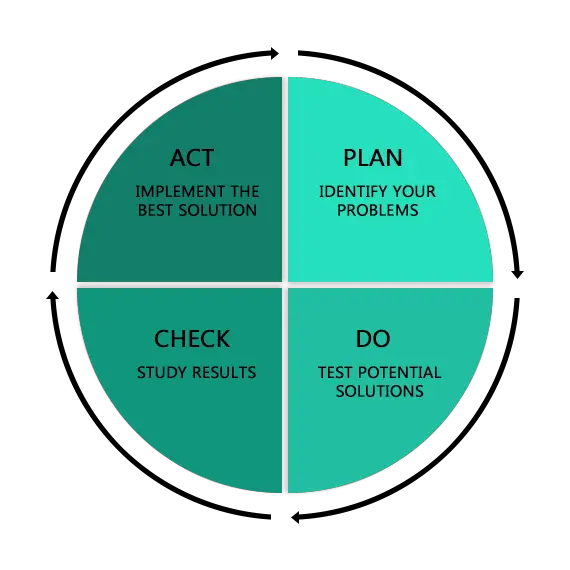
Here’s a breakdown of the four steps:
- Plan: Identify the problem, analyze root causes, set clear objectives, and design potential solutions.
- Do: Implement the solution on a small scale or pilot test.
- Check: Measure and evaluate the results of the test. Did you hit the target?
- Act: If the test was successful, standardize and implement the change. If not, adjust and repeat the cycle.
PDCA Example:
Let’s say a production line faces frequent downtime due to machine breakdowns. The team applies PDCA as follows:
- Plan: Identify the downtime patterns, analyze machine maintenance logs, and set a goal to reduce downtime by 20% within three months.
- Do: Implement preventive maintenance tasks, such as daily inspections and lubrication schedules, on a single machine as a pilot test.
- Check: Review downtime data after one month to see if the improvements met the target.
- Act: If successful, expand the preventive maintenance approach across all machines. If not, modify the plan and run another cycle.
By following this structured approach, businesses can reduce risks, test ideas cost-effectively, and build a culture of continuous improvement. Up next, we’ll explore how you can implement PDCA in your organization using practical steps.
How to Implement PDCA: Step-by-Step Guide
Let’s break down each phase of PDCA into actionable steps that you can apply today. Whether you’re fixing a bottleneck in production or improving customer service, these steps will help you stay on track.
1. Plan: Set the Stage for Improvement
The planning phase is where you define the problem, identify root causes, and lay the groundwork for solutions. Think of this as the foundation—without a solid plan, you risk wasting time and resources.
Steps to Follow:
- Define the problem: Be as specific as possible. Instead of saying, “We have long lead times,” say, “The average lead time for Product X has increased from 2 days to 5 days in the past quarter.”
- Analyze the root cause: Use tools like the 5 Whys, Fishbone Diagram, or Pareto Chart to find what’s truly driving the issue.
- Set clear objectives: Your goals should be SMART (Specific, Measurable, Achievable, Relevant, Time-bound). For example: “Reduce lead time for Product X by 25% within 60 days.”
- Design potential solutions: Brainstorm and prioritize solutions using methods like the Impact vs. Effort Matrix to focus on ideas with the highest payoff.
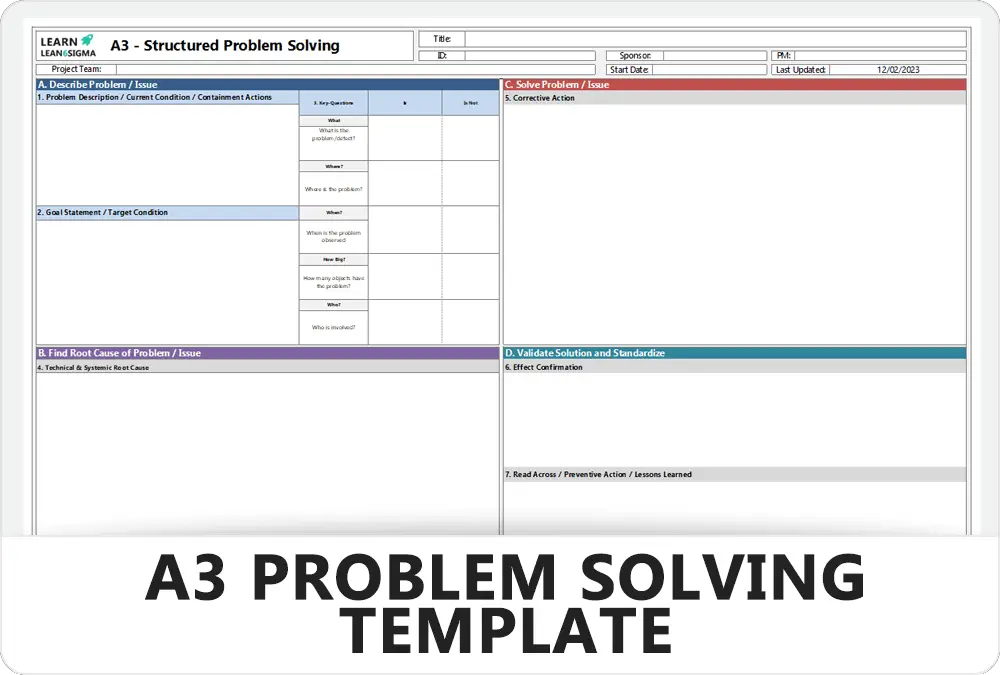
💡 Tip: Document everything in an A3 Report or PDCA template to maintain clarity and alignment across teams.
2. Do: Pilot the Change
Instead of implementing changes company-wide, test them on a small scale to minimize risk and gather real data. This step allows you to “fail fast” and learn before committing significant resources.
Steps to Follow:
- Implement the planned solution as a pilot or trial.
- Ensure that everyone involved understands their roles and responsibilities.
- Monitor the process using data collection sheets, observation logs, or feedback forms.
- Keep communication open—team members should report issues or deviations in real time.
💡 Tip: Track key metrics related to your goal, such as defect rates, lead times, or cycle times, to assess the effectiveness of the test.
3. Check: Review and Evaluate
This is the “moment of truth” where you determine whether the changes produced the desired results. Did you hit your targets, or is further tweaking required?
Steps to Follow:
- Collect data from the test phase and compare it to the initial baseline.
- Use visual tools like Control Charts or dashboards to track trends and spot variations.
- Analyze any deviations—did unexpected obstacles arise?
- Hold a review meeting to discuss lessons learned and feedback from team members.
Key Questions to Ask:
- Did the solution work as planned?
- Were there any unintended side effects?
- Is further refinement needed before scaling up?
4. Act: Standardize or Adjust
If the test was successful, it’s time to standardize the change and roll it out. If not, take the lessons learned and start another PDCA cycle to refine your approach.
Steps to Follow:
- If successful, create Standard Work Instructions (SWI) to document the new process.
- Train employees on the updated process and conduct follow-ups to ensure proper execution.
- If the test wasn’t successful, revisit the planning phase to tweak or replace the solution.
- Schedule regular reviews to monitor long-term performance and prevent regression.
💡 Tip: Always celebrate small wins and recognize team contributions to build engagement in the improvement process.
By following these steps, you’ll ensure that your improvement efforts are structured, measured, and repeatable. But remember, PDCA isn’t a one-and-done solution—it’s an ongoing cycle. As new challenges arise, you can continue refining and optimizing your processes through repeated iterations.
Tips for Maximizing PDCA Effectiveness
Implementing PDCA can transform your processes, but to get the most out of it, you’ll need to apply a few best practices. Here are some practical tips to ensure you’re maximizing its potential:
1. Don’t Get Stuck in the Planning Phase
It’s easy to fall into “analysis paralysis,” especially when dealing with complex problems. While proper planning is critical, it shouldn’t take forever. Set a clear timeline for completing the planning stage and move forward, even if the plan isn’t perfect.
Tip: Use a SIPOC diagram to quickly map out key process elements (Suppliers, Inputs, Process, Outputs, and Customers) without overcomplicating the analysis.
2. Use Visual Aids to Clarify and Communicate
A3 templates, process flowcharts, and dashboards can help teams stay aligned and track progress. Visualizing the PDCA process also makes it easier to identify bottlenecks and share updates with stakeholders.
Example: An A3 problem-solving report summarizes the issue, root cause analysis, action plan, and results in a single, concise document—perfect for quick reviews.
3. Collect Feedback from the People Closest to the Process
Shop floor operators, customer service reps, or anyone directly involved with the process will often provide invaluable feedback. Their insights can reveal hidden issues or opportunities that a high-level analysis may miss.
Tip: During the “Do” phase, conduct brief, informal check-ins with team members to understand challenges and capture improvement ideas.
4. Think Small Before Going Big
One common mistake is trying to implement massive changes across the entire organization without testing first. The beauty of PDCA lies in its iterative nature—small-scale tests reduce risk and allow you to learn from mistakes.
Example: A manufacturer piloting a machine maintenance program on one production line before rolling it out plant-wide can gather crucial data and avoid costly disruptions.
5. PDCA Works Best with Root Cause Analysis
PDCA isn’t just about trying random fixes—it works best when paired with a thorough understanding of what’s causing the problem. Tools like the 5 Whys, Fishbone Diagram, or Failure Mode and Effects Analysis (FMEA) help ensure that the solutions you test address the real problem, not just symptoms.
6. Document and Share Your Learnings (Yokoten)
Don’t let valuable lessons stay confined to one department. Sharing successes and failures through Yokoten (horizontal sharing) ensures that improvements can be replicated across the organization.
Tip: Set up a PDCA improvement board or regular knowledge-sharing meetings to showcase lessons learned and successful projects.
By applying these tips, you’ll avoid common pitfalls, speed up the PDCA cycle, and create a culture of continuous improvement that builds momentum over time.
Conclusion
PDCA is more than just a problem-solving method—it’s a framework for ongoing learning and sustainable growth. By breaking improvements into manageable steps, you can experiment, learn, and refine continuously without risking major disruptions.
Remember, the key to success is consistency. Whether you’re trying to reduce waste on the production floor or improve customer satisfaction, every PDCA cycle brings you one step closer to long-term improvement. Small wins compound over time and lead to significant operational and cultural shifts.
References:
- Isniah, S., Purba, H.H. and Debora, F., 2020. Plan do check action (PDCA) method: literature review and research issues. Jurnal Sistem dan Manajemen Industri, 4(1), pp.72-81.
- Moen, R. and Norman, C., 2006. Evolution of the PDCA cycle [online]
