
Have you ever reached the end of a busy day only to realize you didn’t accomplish anything truly important? You were working non-stop, but your to-do list is still overflowing.
The problem? Not all tasks are created equal. Without a solid prioritization system, you end up reacting to whatever feels urgent rather than focusing on what actually drives results.
That’s where effective task prioritization comes in. By using proven frameworks like the Eisenhower Matrix, the 80/20 rule, and the MIT (Most Important Task) method, you can cut through the noise and spend your time where it truly matters.
In this guide, you’ll learn:
✅ How to separate urgent tasks from important ones
✅ Simple methods to prioritize work for maximum impact
✅ Common prioritization mistakes—and how to avoid them
Why Prioritization is the Key to Productivity
We all have the same 24 hours in a day, yet some people consistently achieve more while others feel stuck in a cycle of endless tasks. The difference? Prioritization.
When you fail to prioritize effectively, you:
❌ Waste time on low-impact tasks while critical work piles up
❌ Feel constantly busy but never truly productive
❌ Struggle to meet deadlines and manage stress
The Cost of Poor Prioritization
Imagine two employees:
- Alex starts the day checking emails, attending back-to-back meetings, and putting out fires. By the time Alex gets to their key project, there’s no time left.
- Jordan starts by tackling the most important task first, then moves on to smaller tasks. By midday, Jordan has already made significant progress on high-impact work.
Who do you think ends the day feeling more accomplished?
The key to working smarter, not harder is understanding that urgent tasks scream for attention, but important tasks drive success. Learning to tell the difference is the first step to mastering prioritization.
Urgent vs. Important: The Eisenhower Matrix
A common trap people fall into is confusing urgent tasks with important ones. Former U.S. President Dwight D. Eisenhower famously said:
“What is important is seldom urgent, and what is urgent is seldom important.”
This principle inspired the Eisenhower Matrix, a simple tool that helps you categorize tasks into four quadrants:

How to Use It:
- List all your tasks.
- Sort them into the four quadrants.
- Prioritize Quadrants 1 and 2. Tasks in Quadrant 2 (important but not urgent) are often neglected—yet they’re the ones that prevent future crises.
- Delegate or eliminate tasks in Quadrants 3 and 4.
By using this matrix, you’ll spend more time on what truly moves the needle and less on distractions.
Powerful Prioritization Techniques to Maximize Productivity
Now that you understand the difference between urgent and important tasks, let’s explore some of the most effective prioritization techniques used by top performers to get more done in less time.
1. The 80/20 Rule (Pareto Principle)
Ever feel like you’re working non-stop but making little progress? That’s because not all tasks create equal value.
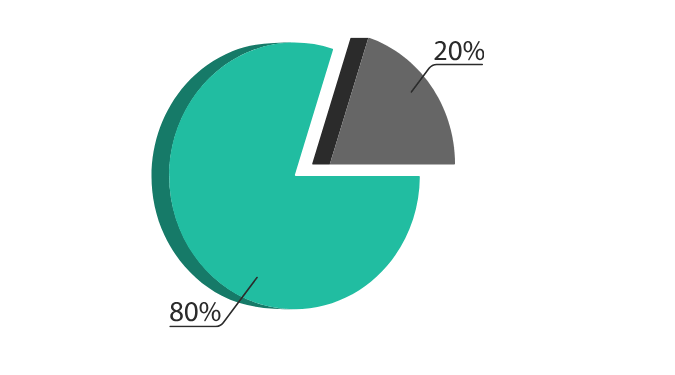
The Pareto Principle, or 80/20 Rule, states that 80% of your results come from just 20% of your efforts.
🔹 Example: In a business, 80% of revenue often comes from 20% of customers. In personal productivity, 80% of progress may come from just a few high-impact tasks.
How to Apply It:
✅ Identify the 20% of tasks that produce the biggest results. What work truly moves the needle?
✅ Reduce or eliminate low-impact tasks. If 80% of your emails are distractions, check them less frequently.
✅ Focus on high-value activities first. Prioritize projects that drive meaningful outcomes instead of getting lost in busy work.

2. The MIT (Most Important Task) Method
If your day got completely derailed, what one task would make it a success?
That’s the idea behind MIT (Most Important Task) prioritization—focusing on just 1-3 high-impact tasks daily.
How to Apply It:
✅ Start your day with your MITs. Before checking emails or attending meetings, tackle these first.
✅ Keep it realistic. Overloading your list with too many MITs defeats the purpose.
✅ Ask yourself: If I only completed these tasks today, would it be a successful day?
🔹 Example: A project manager might set their MIT as finalizing a proposal rather than responding to minor requests.
By completing MITs first, you’ll always make meaningful progress—even if the rest of your day gets chaotic.
3. The ABCDE Method
Not all tasks have the same level of urgency or importance. The ABCDE Method, popularized by Brian Tracy, provides a simple ranking system:
🔵 A = Must Do (Severe consequences if not done)
🟢 B = Should Do (Important, but not critical)
🟡 C = Nice to Do (Little to no consequences if skipped)
🟠 D = Delegate (Someone else can do it)
🔴 E = Eliminate (Not necessary at all)
How to Apply It:
- Write down all tasks for the day.
- Assign each task a letter (A-E).
- Complete “A” tasks first before moving to “B” and “C”.
- Delegate or eliminate “D” and “E” tasks.
🔹 Example:
- A Task: Preparing for a critical client meeting.
- B Task: Writing a follow-up email.
- C Task: Organizing office files.
- D Task: Data entry (delegate to an assistant).
- E Task: Scrolling through social media.
This method forces you to focus on what truly matters rather than just checking off random to-dos.
4. Kanban & Visual Prioritization
If you’re more visual, using a Kanban board (physical or digital) can be a game-changer.

A Kanban board organizes tasks into three simple categories:
📌 Requested/To Do → 📌 In Progress → 📌 Done
How to Apply It:
✅ Break work into tasks and place them in the “To Do” column.
✅ Limit Work in Progress (WIP). Focus on only a few tasks at a time.
✅ Move tasks to “Done” once completed for a sense of achievement.
🔹 Example: A marketing team can use a Kanban board for content production:
📌 To Do: Write blog post, create graphics.
📌 In Progress: Editing, formatting.
📌 Done: Published post.
Tools like Trello, Asana, or Jira make it easy to implement this method digitally.
5. The Ivy Lee Method (For Simplicity Seekers)
If all these methods feel overwhelming, try The Ivy Lee Method, a simple 3-step process from 1918 that’s still incredibly effective today:
How to Apply It:
- At the end of the day, write down the 6 most important tasks for tomorrow.
- Rank them in order of importance.
- Start your next day with the first task and work down the list.
🔹 Why it works:
- Forces you to limit priorities to what truly matters.
- Eliminates decision fatigue—you start your day with a clear plan.
- Helps you build momentum by focusing on key tasks.
Which Method is Best?
There’s no one-size-fits-all approach to prioritization. The key is to experiment and find what works best for your workflow.
✅ If you struggle with urgent vs. important tasks → Eisenhower Matrix
✅ If you want to maximize efficiency → 80/20 Rule
✅ If you prefer a simple daily plan → Ivy Lee Method
✅ If you like visual organization → Kanban Method
✅ If you need structured ranking → ABCDE Method
Common Prioritization Mistakes (And How to Avoid Them)
Now that you know how to prioritize tasks effectively, let’s talk about the pitfalls that derail even the best plans. Many people start strong but fall into common productivity traps that sabotage their efforts. Avoid these mistakes to stay on track and maximize your efficiency.
1. The Multitasking Myth
We’ve all been guilty of trying to juggle multiple tasks at once—writing an email while listening to a meeting, responding to messages while working on a report. It feels productive, but in reality, multitasking slows you down.
🔹 Why It’s a Problem:
❌ Studies show that switching between tasks reduces efficiency by up to 40%.
❌ Your brain takes time to refocus after every switch (a phenomenon called “task-switching cost”).
❌ You make more mistakes when splitting your attention.
✅ How to Fix It:
- Use time-blocking—dedicate specific chunks of time to single tasks.
- Try the Pomodoro Technique—work in focused 25-minute sprints with short breaks.
- Silence notifications to prevent constant distractions.
2. Confusing Urgent Tasks with Important Ones
🚨 Just because something feels urgent doesn’t mean it’s important. Many people spend their entire day putting out fires instead of working on high-impact tasks.
🔹 Example:
- Urgent but Not Important: Responding to every email the moment it arrives.
- Important but Not Urgent: Developing a strategy to improve long-term efficiency.
✅ How to Fix It:
- Use the Eisenhower Matrix to separate urgent distractions from important work.
- Schedule deep work for important tasks before tackling urgent ones.
- Learn to say no—not every request needs your immediate attention.
3. Overloading Your To-Do List
Ever created a to-do list with 20+ tasks, only to end the day feeling overwhelmed and unaccomplished? The problem isn’t that you didn’t work hard enough—it’s that you tried to do too much.
🔹 Why It’s a Problem:
❌ Long to-do lists create stress and decision fatigue.
❌ You focus on checking off easy tasks instead of tackling the most impactful ones.
❌ Unfinished tasks carry over, making every new day feel like an uphill battle.
✅ How to Fix It:
- Limit yourself to 3-5 key tasks per day (MIT Method).
- Use the Ivy Lee Method—write down only six tasks and rank them.
- Recognize that not everything needs to be done today—prioritize ruthlessly.
4. Not Reviewing & Adjusting Priorities
Your priorities aren’t set in stone—but many people treat them that way. A task that was important this morning might be irrelevant by the afternoon.
🔹 Why It’s a Problem:
❌ Sticking to outdated priorities wastes time.
❌ You risk working on the wrong tasks while missing real opportunities.
✅ How to Fix It:
- Do a daily check-in—spend 5 minutes reviewing your priorities each morning.
- Adjust as needed—ask, “Does this still need my focus?”
- Use weekly reviews to evaluate long-term goals and progress.
5. Ignoring Your Energy Levels
Not all hours in the day are created equal. Your energy and focus naturally fluctuate, yet many people don’t plan their work accordingly.
🔹 Example:
- If you’re most focused in the morning, don’t waste that time on emails.
- If you hit an afternoon slump, schedule low-energy tasks like admin work.
✅ How to Fix It:
- Track your energy levels throughout the day to find your peak productivity window.
- Schedule deep work when your focus is highest.
- Use energy-based prioritization—tackle high-focus tasks when you’re at your best.
Conclusion
Prioritization isn’t about doing more—it’s about doing what matters most. When you focus on high-impact tasks instead of just staying busy, you’ll accomplish more in less time while reducing stress.
Here’s a quick recap of how to master prioritization:
✅ Separate urgent from important (Eisenhower Matrix).
✅ Focus on high-impact tasks (80/20 Rule).
✅ Start your day with your Most Important Task (MIT Method).
✅ Limit your to-do list to prevent overload.
✅ Adjust priorities daily to stay on track.
References
- Srdjevic, B., 2005. Combining different prioritization methods in the analytic hierarchy process synthesis. Computers & Operations Research, 32(7), pp.1897-1919.
- Ahl, V., 2005. An experimental comparison of five prioritization methods: investigating ease of use, accuracy and scalability.
